Nail Pops in Drywall: Gainesville, FL Causes and When to Worry
April 14, 2026
Talk to a Drywall Specialist: (352) 649-3354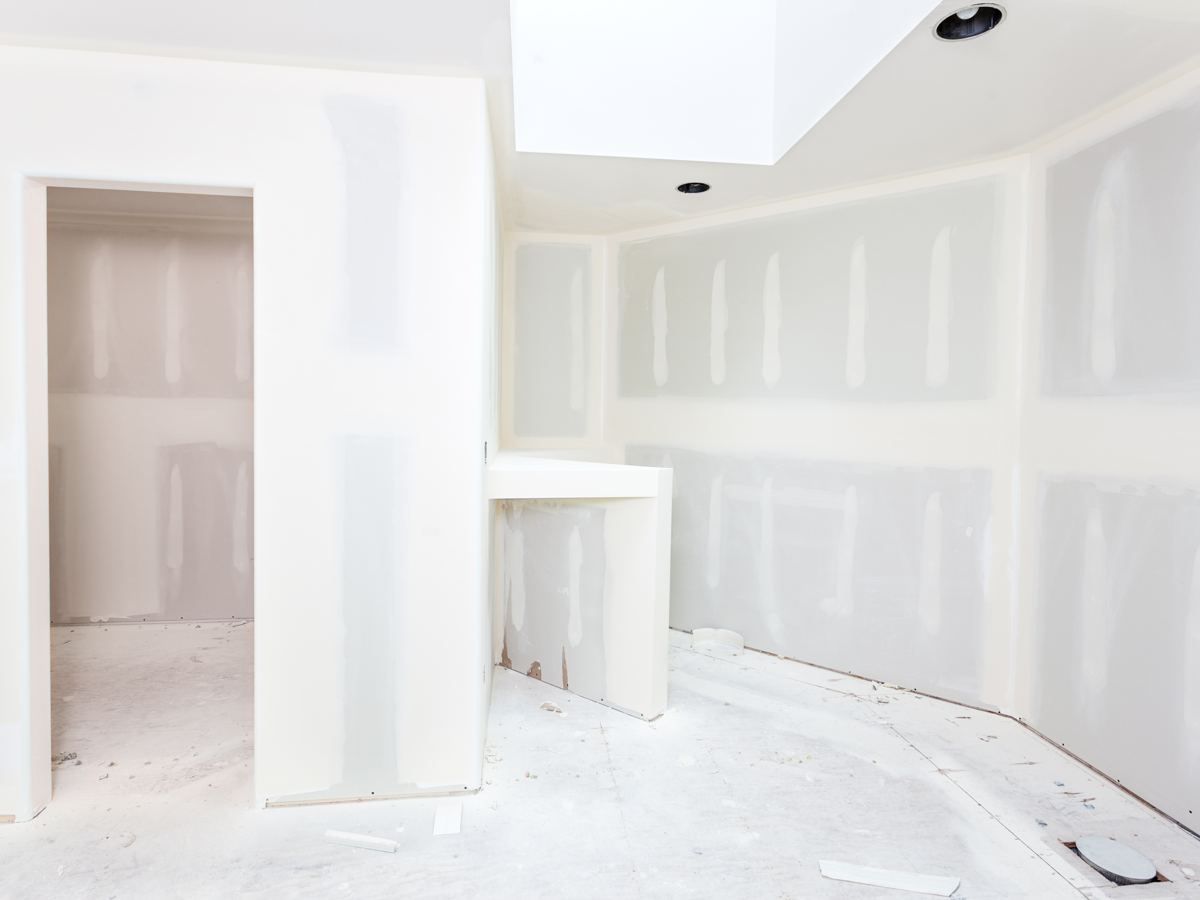
A nail pop shows up as a round bump, a cracked ring in the paint, or a small crater where a fastener head has pushed through the surface of the wall. Gainesville homeowners tend to notice them in spring, when houses come out of the cool, dry months and the framing starts moving again with heat and humidity.
The good news first: single nail pops scattered around a house are one of the most normal things drywall does. The useful question is not whether you have them — it is whether the pattern is trying to tell you something.
Why fasteners push out
Drywall hangs on wood studs, and wood is not a fixed material. Lumber dries and shrinks after a house is built, swells a little in Gainesville's humid summers, and shrinks again in winter. When a stud shrinks away from the board, or twists slightly as it dries, the nail or screw stays with the wood and the board gets pushed off it — or the fastener head ends up proud of the surface. Either way, the bump you see is the fastener announcing itself.
Houses framed with screws pop less than houses hung with nails, because a screw's threads hold the board to the stud. Older Gainesville homes — and there are plenty from the 1960s and 70s around the university and in the northwest neighborhoods — were mostly nailed, which is why pops cluster in houses of that age. Truss uplift is another classic cause on ceilings: roof trusses flex upward in cold weather and lift the ceiling board at the center walls, cracking the corner and popping fasteners along it.
When a pop is just a pop, and when it is a clue
A few pops on walls, with no cracks and no sticking doors, is cosmetic. Fix them during any repaint and forget them. Patterns deserve a closer look: pops marching in a straight line down one stud can mean that stud has twisted or bowed. Pops that arrive with long diagonal cracks from the corners of doors and windows, floors that feel out of level, or doors that suddenly stick are a different conversation — those can point to settlement, and in Alachua County the honest answer includes the word sinkhole, because our limestone geology is known for them. The Florida Geological Survey tracks sinkhole reports for the state, and a structural engineer — not a drywall crew — is the right first call when those signs stack up.
Water is the third pattern. A pop surrounded by any staining, softness, or paint bubbling is not a framing story at all; it is a leak story, and it should be handled like one.
The fix that stays fixed
Hammering the nail back in and mudding over it is the fix that fails — the same movement pushes it out again within a season or two. The lasting repair is to drive a drywall screw an inch or two above and below the pop, pulling the board tight to the stud, then pull or reseat the popped fastener, and finish all three spots. That is standard practice on our drywall repair visits, and it is why a proper pop repair leaves three small mud spots in a short vertical line.
Steps, in order: drive the two screws until they just dimple the paper without tearing it. Pull the old nail, or drive it deep and treat it like the screws. Cover each spot with compound, feathering wider than you think you need. Sand, prime, and paint — primer matters, because bare compound flashes through paint as a dull spot.
Why spring is when you notice them
Nail pops show up all year, but Gainesville homeowners spot them in spring for two reasons. The first is the house itself: after the cool, dry winter months, framing lumber takes on moisture as the humidity climbs, studs swell and shift a fraction, and fasteners that sat quiet all winter get pushed a hair further out. The second is spring cleaning and repainting season — pops hide under old paint and grime until you wash a wall, look at it closely in bright light, or start cutting in a fresh color and see every bump at once.
If you are repainting anyway, pop repair belongs in the prep work, before primer. Painting over an active pop just outlines it in the new color, and the fastener usually keeps moving and cracks the new paint along the same ring. An hour with a screw gun before the paint comes out saves a wall of little circles after it.
How many pops justify a call?
One room with a dozen pops is an easy half-day fix and a good add-on before a repaint. A whole house of them, or pops that keep company with cracks and sticking doors, deserves an in-person look. Call (352) 649-3354 and describe what you are seeing — we will tell you whether it sounds like a patch job, a repaint prep, or something you should show an engineer first.
Related Services
Drywall Repair · Drywall After a Roof Leak · Commercial Drywall Repair · Drywall Ceiling Repair · Drywall Patching · Drywall Replacement · Residential Drywall Repair · Water Damage Drywall Repair
Frequently Asked Questions
What is the unit price for new drywall?
$2.00 to $3.50 per square foot in 2026, hung and finished. Board, tape, mud, and sanding are in that range.
What adds the most cost?
Area first. Then finish level, ceiling height, and texture. Paint is priced apart in most bids.
How do I read a bid?
Each line should name the work and its price: board, hang, finish, texture. If a bid is one lump sum, ask for the lines.
What finish level do I need?
Level 4 is the norm for walls that get flat or eggshell paint. Level 5 is best under gloss paint or hard side light.
Do patches come with a firm price?
Yes, after the free check. Most patches are $250 to $900 based on size and texture work.
Which towns do you serve?
Gainesville and the towns around it — Newberry, Alachua, High Springs, Archer, Micanopy, and more. The service areas page lists every town we serve, and each town page shows its own ranges and facts.
What Does My Drywall Project Cost?
Drywall is priced by the square foot of wall and ceiling surface — not by the size of your floor. That one fact explains most of the gap between quotes. Use the calculator below for a planning range on your job.
Drywall Repair & Patch
Most single repairs land between $250 and $800. We price patches by the square foot of damaged area — roughly $55–$75 a foot — but every repair carries a minimum job charge, because a patch takes the same setup and the same repeat trips for drying coats whether it's the size of a dinner plate or a door. Grouping several spots into one visit is the cheapest way to fix them: they share one minimum. Some repairs are priced flat by the job instead of the square foot: a wet wall section cut out, dried, and replaced (a 4×8 section ran $820 flat), long seam cracks (five re-taped seams across two rooms ran $590 flat), and popcorn removal finished smooth (a 200 sq ft ceiling ran $520 flat).
New Drywall Installation
For bare studs finished paint-ready (a standard Level 4 finish), plan on $1.60–$3.05 per sq ft of wall and ceiling surface, materials and labor included. A typical 12×12 bedroom with 8-foot ceilings — that's 528 sq ft of surface — runs about $845–$1,610 around Gainesville.
Room Remodel & Replacement
Tearing out old drywall and hauling it off adds $0.60–$1.20 per sq ft on top of new installation — a combined $2.20–$4.25 per sq ft. That same 12×12 bedroom, gutted and re-drywalled, runs about $1,160–$2,245. Opening walls can uncover surprises — water damage, old wiring — and those get priced once they're visible, never guessed at in advance.
Garage Drywall
Garages run $1.55–$3.30 per sq ft depending on finish. Code requires 5/8-inch fire-rated (Type X) board on the wall shared with the house, and on the ceiling when there's living space above it — that's the fire separation, not an upsell. Most two-car garages land between $1,900 and $4,100 finished.
Texture, Skim & Paint
On walls that are already up: skim coating runs $0.95–$1.30 per sq ft, orange-peel or knockdown texture $0.80–$1.85, and primer plus two coats of paint $1.05–$2.80. A typical room's walls — about 415 sq ft of surface — usually land between $770 and $1,930 for texture and paint together.
What Moves the Price
- Finish level. A full Level 5 skim coat (for gloss paint or bright, raking light) costs more than standard paint-ready Level 4.
- Ceilings. Overhead work runs roughly 20–25% more than the same area on a wall — lifts, heavier board, two sets of hands.
- Ceiling height. Taller walls mean longer sheets, scaffolding, and slower work.
- Texture matching. Blending a patch into existing orange peel or knockdown is hand work, and it's priced like it.
- Tear-out. Removing old drywall and disposing of it is its own line on the quote.
- Job size. Small jobs carry a minimum charge; on big jobs the setup spreads over more feet, so the per-foot price drops.
These are planning ranges, not a quote — your final price is confirmed after an in-person look, before any work starts.
Estimate Your Project
Measure the damaged section itself — length × width. A full 4×8 sheet section is 32 sq ft.
Spots done in one visit share a single minimum charge.
Price includes tearing out the old drywall and hauling it off.
Includes 5/8″ Type X fire-rated board on the wall shared with the house — and on the ceiling when there is living space above it — as code requires.
Free — no obligation. Your calculator numbers ride along with the request.
Send Your Project to Gainesville Drywall Co
Your estimate is attached automatically. Add your info and — if you can — a few photos of the project. Photos help us price the job before we ever set foot in the house. Prefer to talk? Call (352) 649-3354.