Why Drywall Seams Show Through Paint in Gainesville, FL Homes
March 18, 2025
Talk to a Drywall Specialist: (352) 649-3354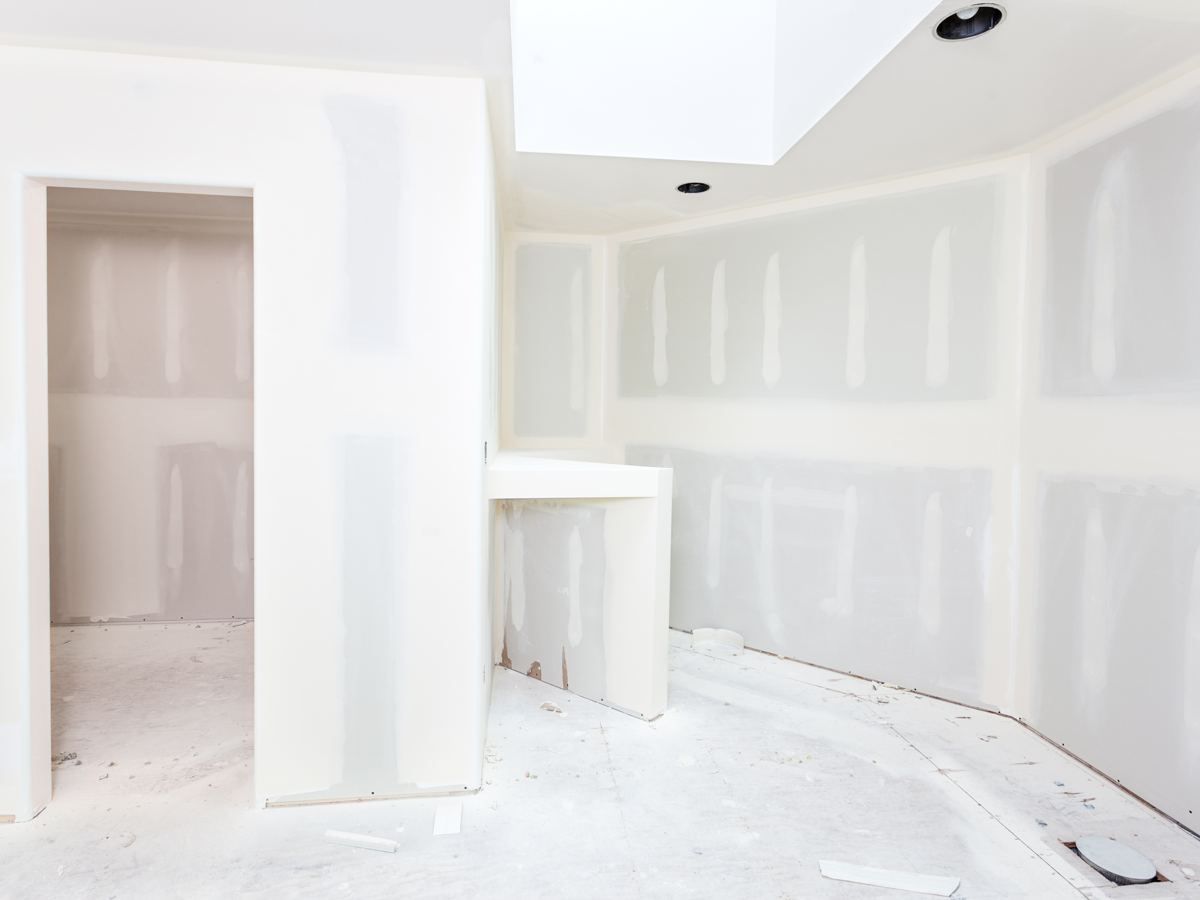
You paint a room, the color looks great in the can, and then the afternoon sun comes through the window and every seam in the wall shows as a faint stripe. Gainesville homeowners call about this a lot in spring, when longer days and lower sun angles rake across walls that looked fine all winter.
Visible seams are rarely a paint problem. Paint is thin. It shows what is under it. The cause sits in the finish work: how wide the mud was feathered, how many coats went on, and whether the wall was finished to the level the room's light demands. Our drywall finishing page walks through the finish levels we use, and this post explains how to read your own walls.
The finish level is usually the story
Drywall finishing is rated on a scale from Level 0 to Level 5, set out by the Gypsum Association in its GA-214 standard. Level 4 — tape covered, two coats over fasteners, sanded — is the normal residential standard and works under flat paint in soft light. Level 5 adds a thin skim coat over the whole surface, which evens out the difference between the paper face of the board and the mud over the joints.
That difference is the whole issue. Board paper and dried compound take paint a little differently, so under strong side light the joint telegraphs through even when the wall feels smooth to your hand. Builders call it photographing. If your seams show mainly when light rakes across the wall early or late in the day, the wall is probably a Level 4 finish in a Level 5 room.
Three checks before you blame the paint
First, run your palm flat across a seam. If you can feel a ridge or a dip, the mud work itself is uneven, and paint will not hide it. Second, look at the wall with the room lights off and a flashlight held against the wall pointing along it. Raking light shows every bump and hollow; what you see there is what guests see at sunset. Third, check the paint sheen. Each step up in sheen — flat, eggshell, satin, semi-gloss — shows more surface flaws. A bathroom or kitchen repainted in satin will show seams that flat paint hid for years.
Humidity plays a smaller part here in Gainesville, but it is real: a seam repaired in a damp week can dry slowly and shrink back a little more than the surrounding mud, leaving a shallow line that only shows after painting. That is one reason drywall taping and mudding done in muggy weather needs longer dry times between coats.
What fixes it, from lightest to heaviest
If the seams feel smooth and only show in raking light, a high-build primer and a return to flat or matte paint often settles it. If you can feel the ridge, a finisher can float the joints wider — spreading compound 12 to 24 inches across each seam so the rise is too gradual to see. For a room that still shows stripes after that, a full skim coat is the honest fix: the whole wall gets a thin coat, sanded and primed, which is the Level 5 finish described above.
One warning: sanding harder is not a fix. Over-sanding cuts into the paper face and makes the texture difference worse. And adding more paint coats just gives the stripe a glossier frame.
Ceilings show it worst of all
Everything above applies double to ceilings. A ceiling gets raking light from every window in the room, all day, and nobody hangs pictures on it to break up the view. Ceiling joints also run across wide, unbroken spans where the eye has nothing else to look at. If your walls pass and your ceiling does not, that is normal — the ceiling is simply the harder test, and it is often the one surface in the room that truly needs the skim coat.
Texture plays a part too. A wall that was textured to match an older orange-peel or knockdown finish will show its seams differently than a smooth wall: the mud over the joints takes texture differently than the board face, so a seam can show as a smooth stripe running through the texture even when it is perfectly flat. That is a texture-matching problem, not a flatness problem, and the fix is in the spray work, not the mud.
When to call us
If two or more walls in a room show seams, or the ceiling shows them too, the skim-coat route is usually cheaper than fighting room by room. Call (352) 649-3354 and we will look at the walls with you, tell you which level the room needs, and put the price in writing before any work starts.
Related Services
Drywall Finishing · Popcorn Ceiling Removal · Drywall Painting and Finishing · Drywall Taping and Mudding · Popcorn Ceiling Removal · Texture Matching
Frequently Asked Questions
What is the unit price for new drywall?
$2.00 to $3.50 per square foot in 2026, hung and finished. Board, tape, mud, and sanding are in that range.
What adds the most cost?
Area first. Then finish level, ceiling height, and texture. Paint is priced apart in most bids.
How do I read a bid?
Each line should name the work and its price: board, hang, finish, texture. If a bid is one lump sum, ask for the lines.
What finish level do I need?
Level 4 is the norm for walls that get flat or eggshell paint. Level 5 is best under gloss paint or hard side light.
Do patches come with a firm price?
Yes, after the free check. Most patches are $250 to $900 based on size and texture work.
Which towns do you serve?
Gainesville and the towns around it — Newberry, Alachua, High Springs, Archer, Micanopy, and more. The service areas page lists every town we serve, and each town page shows its own ranges and facts.
What Does My Drywall Project Cost?
Drywall is priced by the square foot of wall and ceiling surface — not by the size of your floor. That one fact explains most of the gap between quotes. Use the calculator below for a planning range on your job.
Drywall Repair & Patch
Most single repairs land between $250 and $800. We price patches by the square foot of damaged area — roughly $55–$75 a foot — but every repair carries a minimum job charge, because a patch takes the same setup and the same repeat trips for drying coats whether it's the size of a dinner plate or a door. Grouping several spots into one visit is the cheapest way to fix them: they share one minimum. Some repairs are priced flat by the job instead of the square foot: a wet wall section cut out, dried, and replaced (a 4×8 section ran $820 flat), long seam cracks (five re-taped seams across two rooms ran $590 flat), and popcorn removal finished smooth (a 200 sq ft ceiling ran $520 flat).
New Drywall Installation
For bare studs finished paint-ready (a standard Level 4 finish), plan on $1.60–$3.05 per sq ft of wall and ceiling surface, materials and labor included. A typical 12×12 bedroom with 8-foot ceilings — that's 528 sq ft of surface — runs about $845–$1,610 around Gainesville.
Room Remodel & Replacement
Tearing out old drywall and hauling it off adds $0.60–$1.20 per sq ft on top of new installation — a combined $2.20–$4.25 per sq ft. That same 12×12 bedroom, gutted and re-drywalled, runs about $1,160–$2,245. Opening walls can uncover surprises — water damage, old wiring — and those get priced once they're visible, never guessed at in advance.
Garage Drywall
Garages run $1.55–$3.30 per sq ft depending on finish. Code requires 5/8-inch fire-rated (Type X) board on the wall shared with the house, and on the ceiling when there's living space above it — that's the fire separation, not an upsell. Most two-car garages land between $1,900 and $4,100 finished.
Texture, Skim & Paint
On walls that are already up: skim coating runs $0.95–$1.30 per sq ft, orange-peel or knockdown texture $0.80–$1.85, and primer plus two coats of paint $1.05–$2.80. A typical room's walls — about 415 sq ft of surface — usually land between $770 and $1,930 for texture and paint together.
What Moves the Price
- Finish level. A full Level 5 skim coat (for gloss paint or bright, raking light) costs more than standard paint-ready Level 4.
- Ceilings. Overhead work runs roughly 20–25% more than the same area on a wall — lifts, heavier board, two sets of hands.
- Ceiling height. Taller walls mean longer sheets, scaffolding, and slower work.
- Texture matching. Blending a patch into existing orange peel or knockdown is hand work, and it's priced like it.
- Tear-out. Removing old drywall and disposing of it is its own line on the quote.
- Job size. Small jobs carry a minimum charge; on big jobs the setup spreads over more feet, so the per-foot price drops.
These are planning ranges, not a quote — your final price is confirmed after an in-person look, before any work starts.
Estimate Your Project
Measure the damaged section itself — length × width. A full 4×8 sheet section is 32 sq ft.
Spots done in one visit share a single minimum charge.
Price includes tearing out the old drywall and hauling it off.
Includes 5/8″ Type X fire-rated board on the wall shared with the house — and on the ceiling when there is living space above it — as code requires.
Free — no obligation. Your calculator numbers ride along with the request.
Send Your Project to Gainesville Drywall Co
Your estimate is attached automatically. Add your info and — if you can — a few photos of the project. Photos help us price the job before we ever set foot in the house. Prefer to talk? Call (352) 649-3354.